I read dozens of books every year, ranging from non-fiction to fiction and across various topics. It has helped me with what the Germans call Denkanstoß – which means ‘giving food for thought’.
I’ve been doing this for more than fifteen years and it has helped me to grow as a person, develop new perspectives and reflect deeply upon issues that we face.
Here are my five favourite books that I’ve read in 2025.
The Big Score: Robert Friedland, Inco, & The Voisey’s Bay Hustle – Jacquie McNish
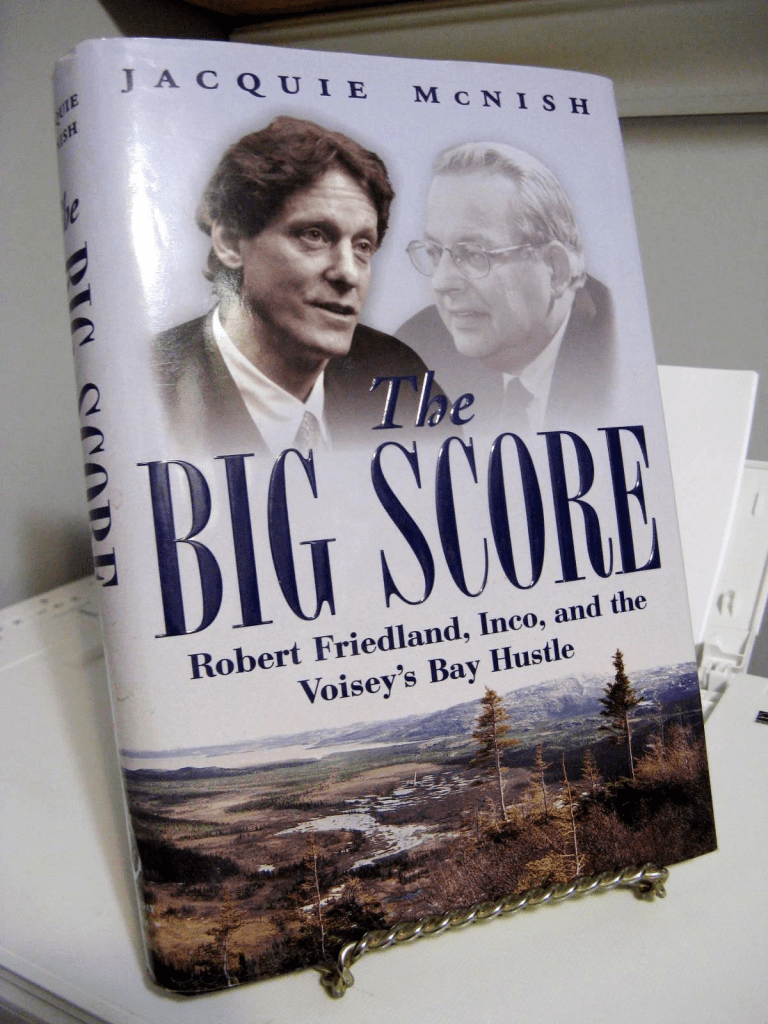
The Big Score is my favourite read of 2025. It’s a page-turner that feels like a Netflix corporate drama and a John le Carré novel at times. Although published back in the late 90s, this is an incredible story of how a so-called group of upstarts came to own the gigantic nickel deposit Voisey’s Bay in an inhospitable cold-swept terrain in Labrador, Canada.
Mining corporates climbed over one another to acquire Voisey’s Bay in 1994 and the leader of this group of upstarts, Robert Friedland, played all of them against each other to raise the stakes. His profits alone was a cool CAD600 million when Inco eventually acquired Voisey’s Bay.
This will probably interest those who wish to understand the ‘behind-the-scenes’ in M&A in the junior mining space, but anyhow, it makes for a great general read.
Breakneck: China’s Quest to Engineer the Future – Dan Wang
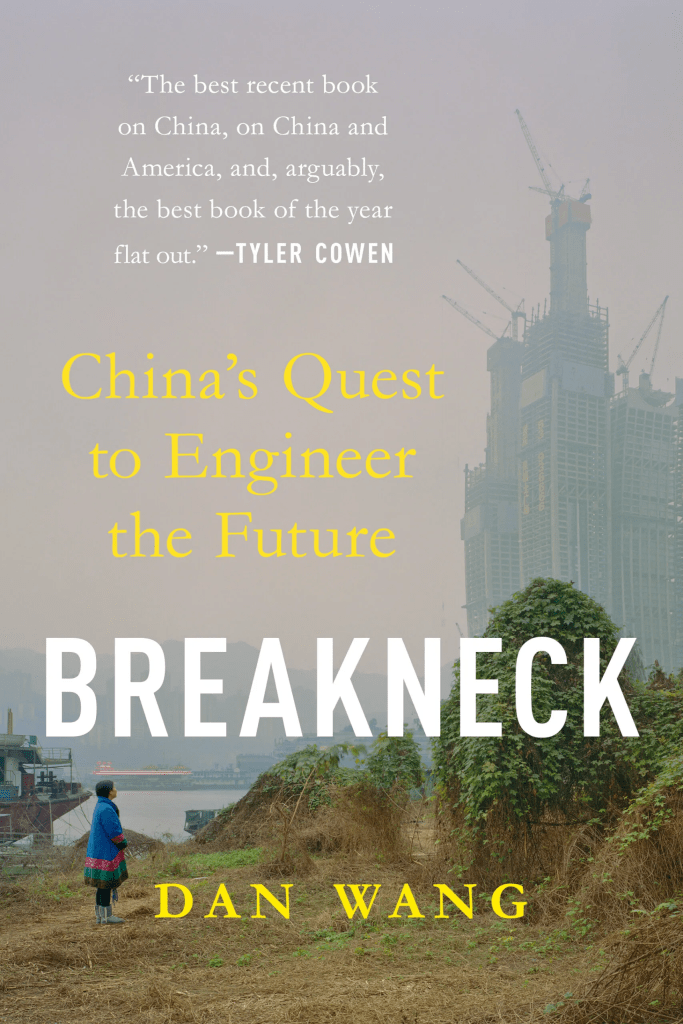
Breakneck takes readers into understanding the social backdrops and political regimes of China and the U.S. In particular, the author differentiates China as the engineering state and the U.S. as the lawyer state, where their vast differences help explain the way their respective countries are managed.
While Dan Wang was an analyst at research firm Gavekal, he was one of my ‘must-reads’. His observations and notes on China through his blog is widely-followed in the U.S. and he has become somewhat of a subject expert on US-China developments in recent years.
His book is a refreshing read given the amount of misinformation and biases surrounding this complicated issue. It offers readers a framework to understand both countries’ and helps put current Transpacific tensions in perspective.
How the World Became Rich – Mark Koyama, Jared Rubin
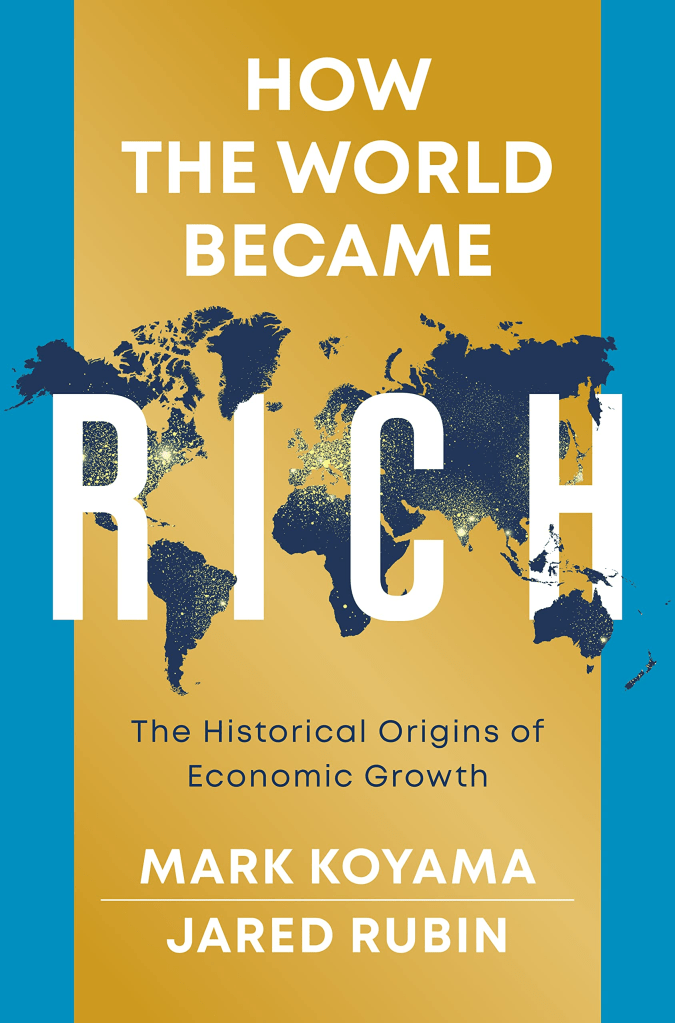
Koyama and Rubin explores the complex topic of economic growth in this book using a multi-faceted approach, covering various theories that include geography/climate, resources, colonialism, institutions, etc.
What I like about this book is that it builds upon existing research and literature on economic development and prosperity. Readers familiar with the topic will be able to relate to the cited research and theories of growth.
The authors also didn’t limit their illustrations to western developed countries but to emerging and frontier economies. The results of state-sponsored export-led industrialisation across Asia and even the role of religion and culture in the Middle-East and Latin America are explored.
This all-encompassing approach to the subject is a practical way to understand more about how prosperity is created across time and cultures. While no new theories are put forth, it’s quite relevant for investors and policymakers to see the topic with new perspectives.
The Mamba Mentality: How I Play – Kobe Bryant
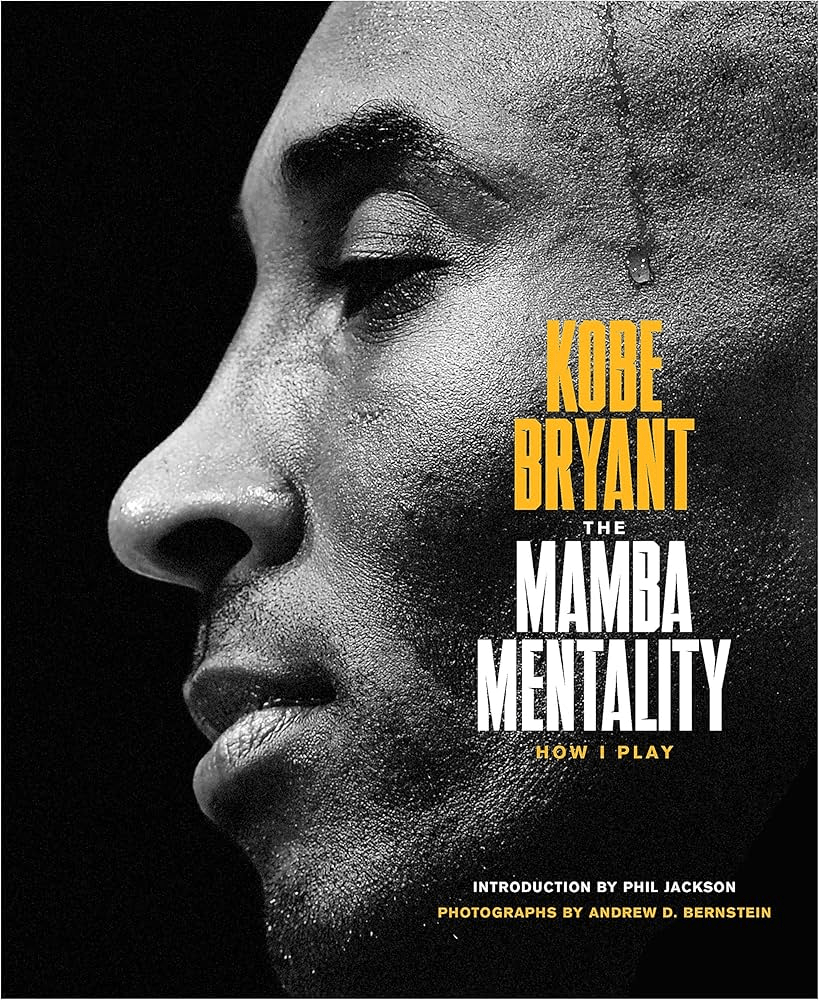
The late Kobe Bryant was a beast. This is more like an autobiography where Kobe spelled out his daily routines, his beliefs and his devotion to basketball.
It’s an unique look into the mind of a champion sportsman and an inspiring read to understand what it takes to succeed on the basketball court. There’s a lot of takeaways here for anyone in competitive fields (such as professional trading/investing).
The book is filled with beautiful photographs by Hall of Fame photographer Andrew Bernstein, and makes for a light and fascinating, coffee-table read.
Katabasis – R. F. Kuang
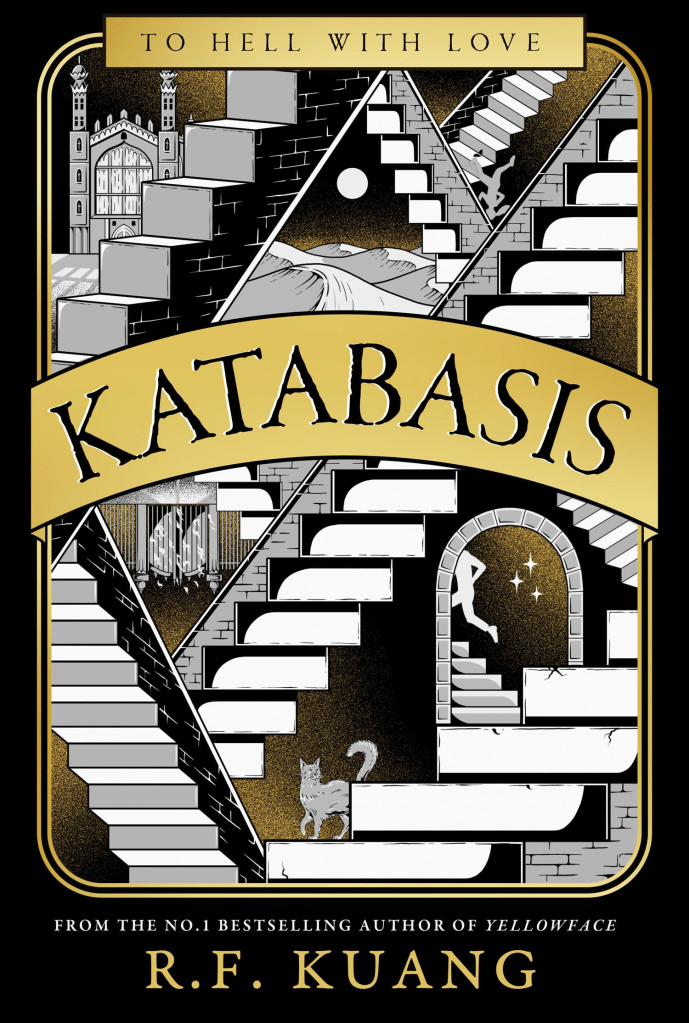
I’ll never tire of R. F. Kuang. I’m always sent on an exhilarating journey, and her latest novel proves it.
This time it’s Cambridge, where the story follows graduate students Alice Law and her classmate Peter Murdoch as they travel to the underworld to retrieve their professor who perished in an accident.
Unlike her other novels like The Poppy War trilogy and Babel, the style in Katabasis is quite different. Readers are sucked right into action and contextual explanations and worldbuilding occur concurrently. Because it’s Cambridge, there’s a lot of academic themes that the story revolves around – topics from philosophy, mathematics, linguistics and much more.
I love the atmosphere of the story – the magic, the lore of the underworld, Latin, Classical Chinese – it just couldn’t get any better. Oh, and here’s the New Yorker did on R. F. Kuang.
 Kean Chan
Leave a comment